
Games to Support Numeracy Learning
There are many ways to support mathematical thinking and reasoning but playing games is one of the most effective and engaging ways to think about strategies and communicate about reasoning.
Board and Card Games
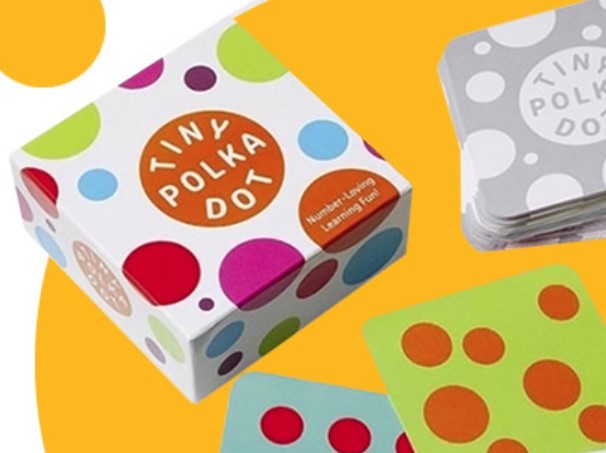 | Tiny Polka Dot | Card-based game to support counting, arithmetic and logic |
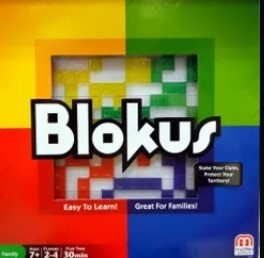 | Blokus | Strategy game with different coloured tiles that players must lay onto a game board. |
 | ADSUMUDI | 52 double-sided cards containing 416 unique challenges. Adsumudi can be played solo, collaboratively, or as a traditional competition with a winner with 2-6 people. Each game takes about 15 minutes and can be differentiated to different learning levels using the star ranking on each card. There are also other versions of Adsumudi available for ages 4+ (little ones), 6+ (fun ones) and wild ones (9+). |
 | Proof | Players make creative equations among 9 number cards, shout the result and show their proof to collect cards to win. The game can be used to practice fluency at many grade levels as appropriate. |
 | Honeycomb | Players connect tiles by matching symbols - the more matches made earn more points. Intended for ages 5+, Honeycomb is a great way to reinforce turn-taking, counting and score-keeping. There are multiple ways to play and the instructions are short but can be downloaded in 20 languages. |
 | Yahtzee | Classic dice rolling game in which players get three attempts at rolling different combinations and values of dice. The winner will score the highest point after 13 rounds of play. Yahtzee is great for practice with subitizing, adding, game strategy acquisition and turn taking. |
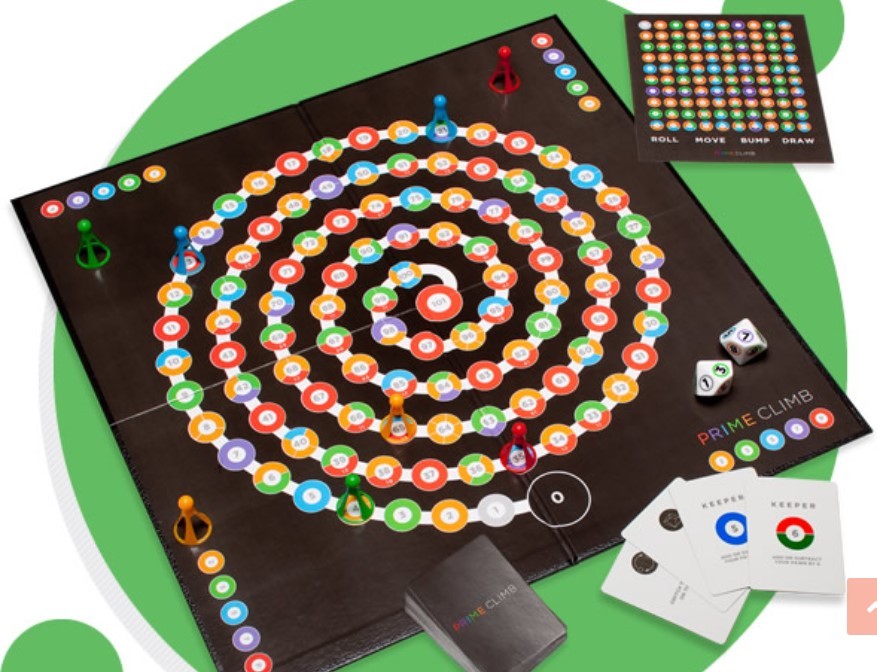 | Prime Climb | Board Game that encourages deeper understanding of multiplication, division and prime numbers. |
 | Match Madness (Uzzle) | Players race to arrange 5 cubes to match a pattern card as quickly as possible. The first player to succeed grabs the card, and the one with the most cards wins. Suitable for ages 7+ and 1-4 players. There are also junior and duo versions available. All versions are great to reinforce spatial thinking and pattern recognition. |
 | Spot It | Spot It! 1,2,3 offers a fun and rewarding way for preschoolers to master numbers and shapes. Reinforce color recognition, verbal and visual identification skills and vocabulary as the matching symbol must be the same color. Suitable for ages 3+ and 2-8 players. |
Digital Resources
The links below (red) will lead you to digital resources that are not created and hosted by SD91 and may have been altered or changed they were last reviewed. Please use professional judgment when assessing whether these resources are a good fit for your learners, its applicability to the BC curriculum and your school context. If you find any unexpected information, please reach out to Curriculum Services to have the content reviewed.
 | Coast Metro Elementary Math Project | Coast Metro Elementary Math Project Math Games | Curated List of Math Games, sorted by grade band Listings include simple games, card and dice games as well as board games and electronic resources |
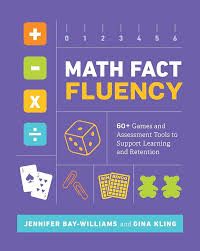 | University of Kentucky | Math Fact Fluency Games | Companion website to “Math Fact Fluency: 60+ Games and Assessment Tools to Support Learning and Retention” by Jennifer Bay-Williams and Gina Kling |
 | SD 43 - Coquitlam | Intermediate and Middle School Games
| SD 43 Numeracy Lab Games Collection |
 | Number Hive | Printable Game Boards | Number Hive is a strategic mathematics game designed to help students develop a deep understanding of mathematics concepts through purposeful play. Students engage in strategic gameplay, reinforcing essential skills like addition, subtraction, multiplication, and division while building critical thinking and problem-solving abilities. |
 | K-2 Card Games | Love Maths | Short videos and descriptions of card games that can be played in K-2 classes to support number sense building and introduction to operations with numbers. |